Color Blocking Outfits: How to Wear Bold Color Combinations That Work
What Is Color Blocking in Fashion?
Color blocking is a styling technique that uses large, solid panels of contrasting color in a single outfit — distinct blocks of color rather than prints, patterns, or gradients. The goal is deliberate contrast: colors placed next to each other that create visual impact through difference rather than harmony.
The technique has roots in abstract art — specifically the geometric color field paintings of artists like Mondrian and Rothko — and entered fashion most explicitly in the 1960s when designers began translating those visual principles directly into garment construction. Color-blocked shift dresses and co-ord sets from that era remain the reference point for the technique today.
In contemporary streetwear and fashion, color blocking appears across every category: garments cut from multiple solid-color fabric panels, outfits where each piece is a different bold color, and accessories that introduce a contrasting color block into an otherwise monochromatic look.
Color Theory Basics for Color Blocking
Color blocking works best when the colors chosen have a clear relationship on the color wheel. Understanding three basic pairing types gives you a framework for any color blocking combination:
- Complementary blocking — colors directly opposite on the color wheel (orange and blue, red and green, yellow and purple). Maximum contrast, most visually striking, requires confidence in execution.
- Analogous blocking — colors adjacent on the color wheel (orange and yellow, blue and purple, green and teal). Less contrast, more harmonious, easier to wear and harder to get wrong.
- Triadic blocking — three colors equally spaced around the color wheel (red, yellow, blue or orange, green, purple). Most complex, but creates a balanced visual tension when the proportions are managed correctly.
For most color blocking outfits, two colors with a neutral anchor (white, black, grey, or beige) is the most wearable formula. The neutral manages the contrast and gives the eye a rest point between the two bold colors.
15 Color Blocking Outfit Ideas
1. Cobalt Blue and Bright Orange
The most classic color blocking combination — complementary colors at full saturation. A cobalt blue oversized shirt and bright orange wide-leg trousers with white sneakers. The white shoe creates a clean break between the two powerful colors and prevents the outfit from becoming overwhelming.
2. Red and Camel
An accessible color blocking combination for anyone new to the technique. A bold red sweater or jacket with camel or tan trousers.
The warm tone of camel is close enough to red to create cohesion while contrasting enough to read as deliberate blocking. Clean neutral footwear in white or bone completes the look.
3. Forest Green and Burgundy
Rich, autumnal color blocking with a sophisticated register. Forest green wide-leg trousers with a burgundy or deep wine knit sweater. Works exceptionally well in heavier autumn and winter fabrics — the depth of both colors suits wool, cord, and thick cotton.
4. Hot Pink and Cobalt
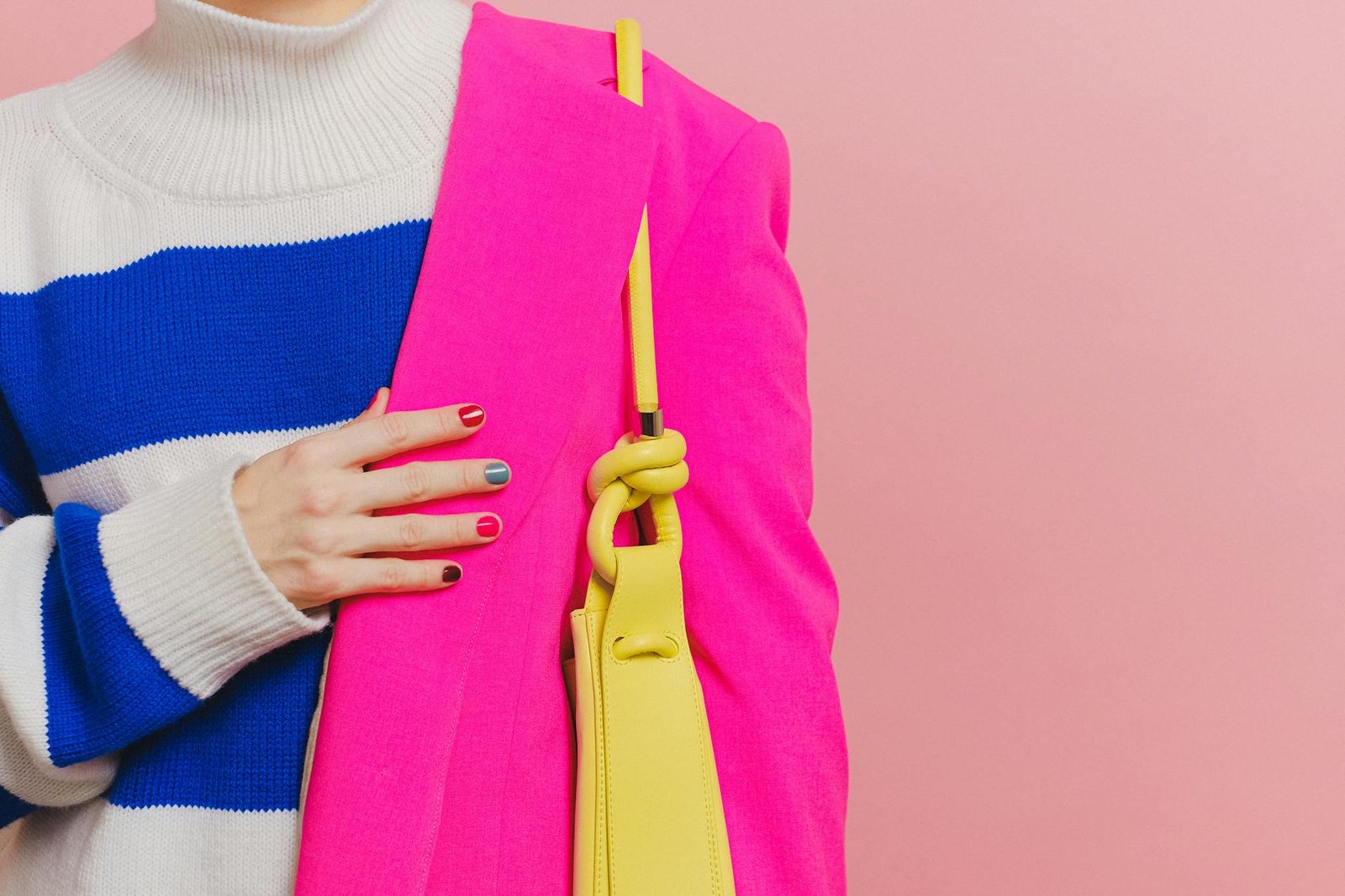
Maximum energy color blocking. A hot pink blazer or jacket over a cobalt blue fitted top with white or neutral trousers. The two vivid colors together make a strong statement — using white or cream as the third element in trousers or shoes prevents the look from becoming costume.
5. Yellow and Grey
Color blocking that is accessible and high impact without requiring bravery. A bold yellow top or jacket against grey trousers or a grey base. Grey acts as a near-neutral that still has chromatic presence — it does not disappear the way white does, but it does not fight with the yellow either.
6. Purple and Green
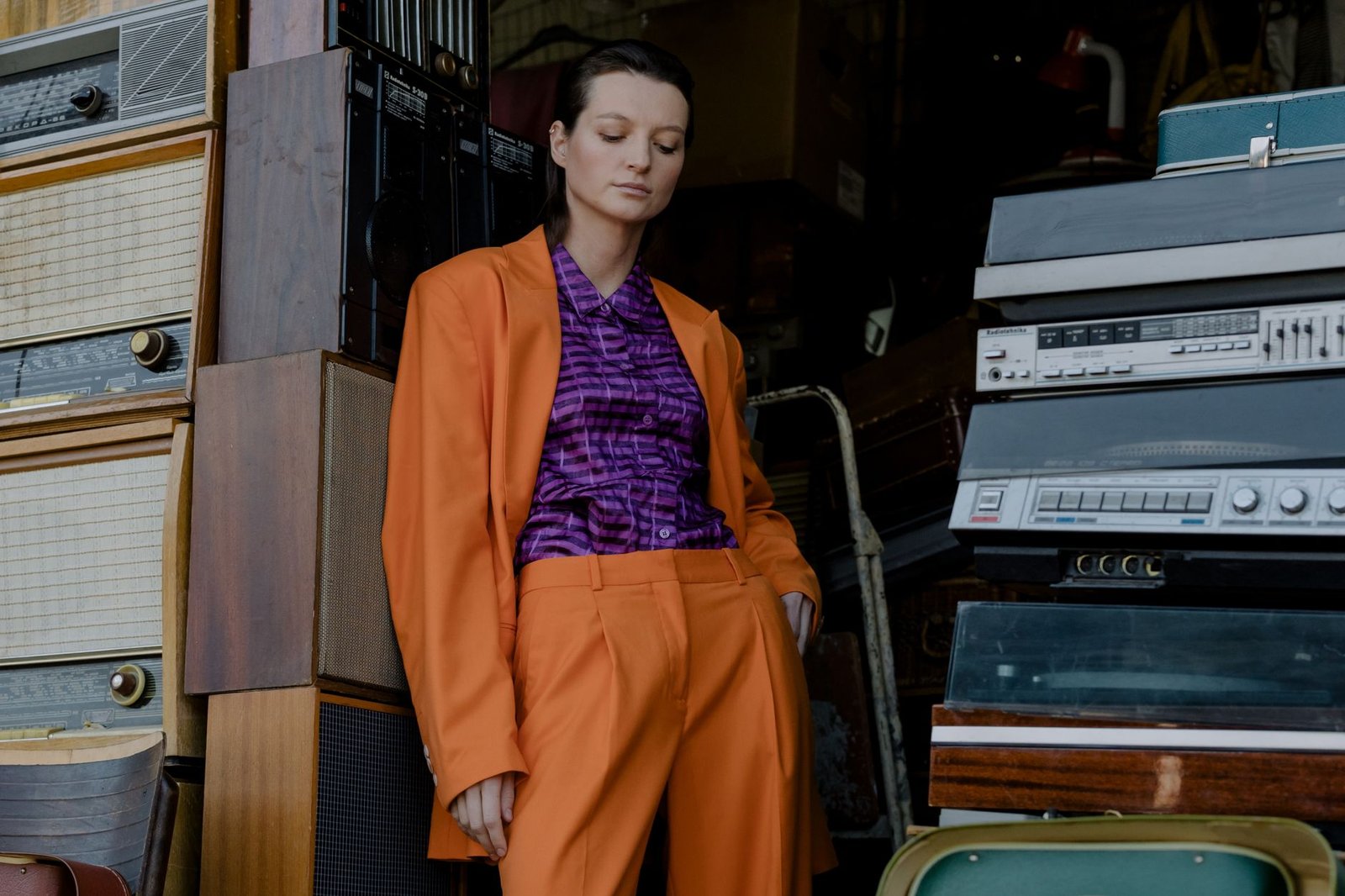
An unexpected combination that is increasingly prominent in contemporary fashion. Deep purple trousers with a bright grass or olive green top. The unexpected pairing is what makes it interesting — these colors are not immediately intuitive as a combination, which is why it reads as intentional when it works.
7. Black and White with One Accent Color
The simplest color blocking formula: a monochromatic black-and-white outfit punctuated by one bold color accent. A white shirt, black trousers, and a red bag.
Or a black dress with a yellow belt. The single accent color does significant visual work against the neutral base without requiring you to manage two bold colors simultaneously.
8. Terracotta and Pale Blue
Unexpected complementary blocking with a softer register than pure red and blue. Terracotta orange-brown against pale sky blue creates a warm/cool contrast that feels considered and editorial. Works across casual and smart-casual contexts.
9. Monochromatic Blocking — One Color at Different Values
Color blocking does not require multiple colors — blocking the same color at different saturations creates depth and sophistication. Deep navy trousers, medium blue shirt, and pale blue shoes. The outfit reads as intentional color work rather than a uniform, because the values are distinct enough to register as separate blocks.
10. White and Bright Color Split
A clean white base — dress, trousers, or shirt — split with one bold color block. A white dress with a bright pink belt creating a horizontal color block at the waist.
Or a white shirt with one sleeve in a contrasting color. The white acts as canvas; the color acts as mark.
11. Neon Blocking
For maximum impact, neon color blocking uses electric, fluorescent tones as the two blocking colors. Neon yellow and neon pink.
Neon green and electric blue. Works best in small doses — neon as an accent block rather than the dominant color in the outfit.
Neutral footwear is mandatory when blocking with neons.
12. Neutral Blocking — Beige, Cream, and Taupe
Color blocking does not require bold colors. An outfit built from distinct blocks of beige, cream, off-white, and light camel is technically color blocking and reads as quiet, luxurious, and intentional. This is color blocking for people who prefer not to be looked at while still being well-dressed.
13. Head-to-Toe Single Color Blocks
Each garment in a different solid bold color from head to toe: yellow top, red trousers, green shoes. Full commitment, maximum impact. This requires selecting colors that share temperature (all warm, all cool) to prevent visual chaos — and keeping accessories simple to avoid adding more blocks than the eye can process.
14. Color Blocking with a Coat or Jacket
A strong color coat or jacket over a neutrally dressed body. The coat provides a full-length color block that transforms the outfit — a bright red oversized coat over all-grey clothing turns a neutral outfit into a color blocking look through the outermost layer alone.
15. Gradient as a Transitional Block
A gradient piece used as the transitional element between two solid color blocks — the gradient carries colors from one side to the other and unifies contrasting solids on either side of it. A sunset gradient tee worn with orange trousers and purple accessories uses the gradient as the middle block that makes the outer blocks coherent.
Rules for Color Blocking That Always Work
- Limit to three colors maximum — including any neutral. More colors create chaos rather than composition.
- Match the saturation level — two vivid colors together, or two muted colors together, work better than a vivid color paired with a washed-out one. Consistency in color intensity creates visual harmony even in high-contrast combinations.
- Keep silhouettes simple — color blocking is powerful enough without the additional complexity of ruffles, cutouts, or heavy textures. Let the color do the work.
- Start with a neutral as the foundation — if you are new to color blocking, build on a neutral base and introduce one bold color first before working up to full complementary blocking.
Frequently Asked Questions
What is color blocking in an outfit?
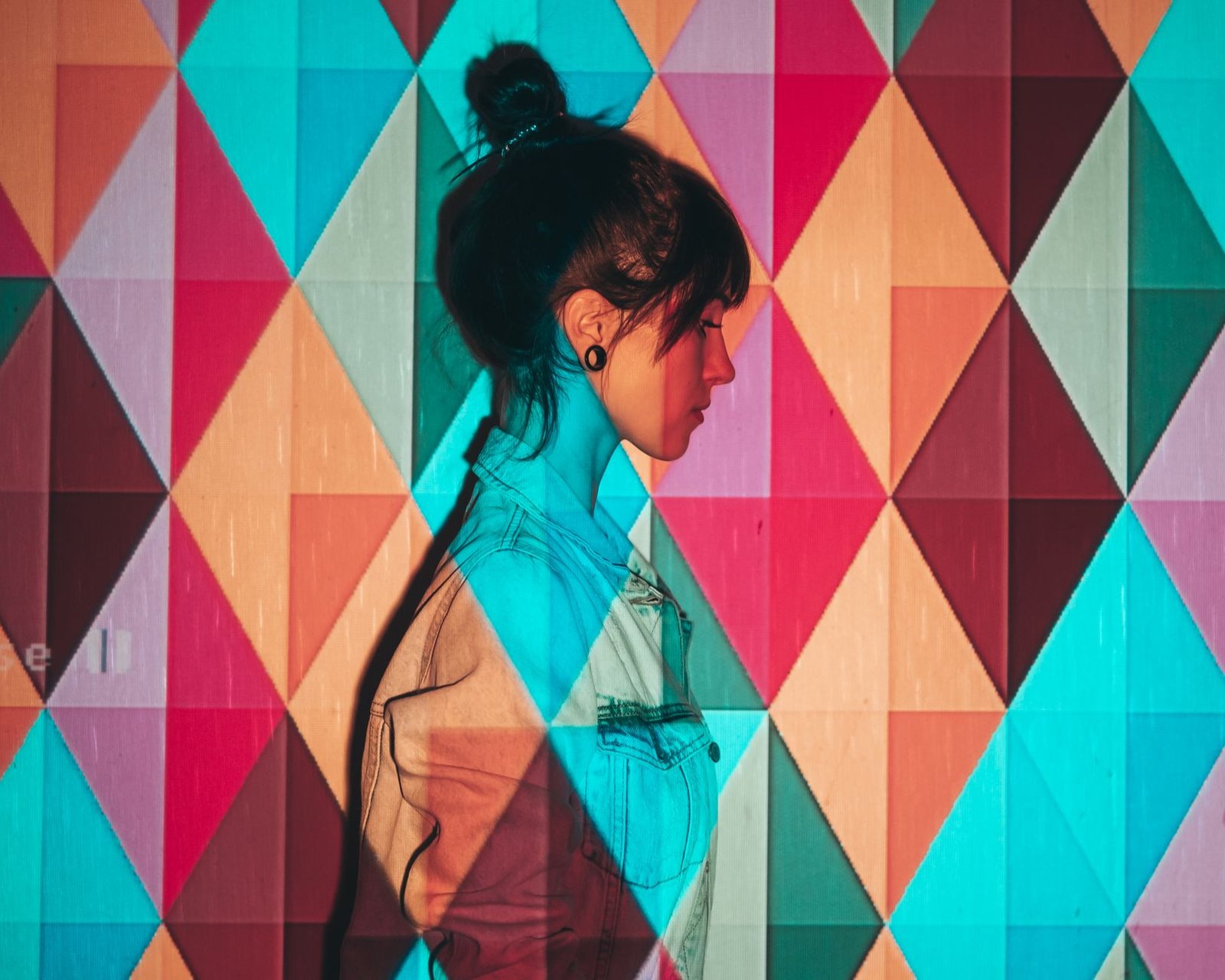
Color blocking in an outfit means wearing two or more distinct solid colors in separate, contrasting blocks — either within a single garment (fabric panels in different colors) or across multiple pieces (each garment in a different bold color). The effect is graphic and deliberate, inspired by abstract geometric art.
What colors look best in color blocking outfits?
Complementary colors — those opposite each other on the color wheel — create the strongest color blocking effect: orange and blue, red and green, yellow and purple. Analogous colors (adjacent on the wheel) create softer, more wearable blocking. For beginners, one bold color against a neutral like white, black, or grey is the most accessible starting point.
Is color blocking still in style in 2026?
Yes — color blocking is a perennial technique in fashion rather than a trend with a limited lifespan. It resurfaces in new forms with each season but never disappears entirely. In 2026, color blocking is particularly present in streetwear and contemporary fashion, often combined with gradient elements or oversized silhouettes for updated takes on the classic technique.
For practical guidance on building colour blocked outfits, Refinery29 outlines how to colour block effectively with specific combination strategies and celebrity styling examples that make the technique approachable.