How to Style a Longline Blazer: Elevated Outfit Ideas for Women
A longline blazer — a blazer that extends significantly below the hip, typically reaching to mid-thigh or the knee rather than ending at the traditional hip-skimming blazer length — creates a proportionally distinctive silhouette that immediately reads as fashion-considered and deliberate. Where a regular blazer ends at the hip and acts primarily as a structured outer layer, the longline blazer functions simultaneously as a jacket, a coat-substitute, and in some approaches, as a dress — its extended length changes the proportion formula of the entire outfit beneath it.
The longline blazer sits distinctly between a standard blazer and a longline coat. It has the blazer’s characteristic lapel construction, suiting fabric, and structured shoulders, but its extended length creates a proportion that reads as more fashion-forward and more experimental than either a standard blazer or a conventional coat. This positioning makes it one of the most versatile and most distinctively fashion-intelligent outerwear choices available.
Trend Overview
The longline blazer has been a consistent presence in fashion for several seasons, driven by the tailoring revival that has positioned exaggerated blazer proportions as one of the most directional trends in contemporary women’s dressing. Oversized and elongated blazer silhouettes featured prominently in the collections of Bottega Veneta, The Row, and numerous contemporary brands, establishing the longline blazer as a genuinely high-fashion investment piece rather than simply a niche proportion experiment. The coloured blazer and printed blazer guides cover statement blazers in non-neutral tones — the longline format works equally effectively in bold colours and prints as in classic neutrals.
Styling Recommendations

The Blazer-as-Dress Approach
A longline blazer worn as a dress — belted at the waist to create a defined silhouette, with nothing visible beneath except the shirt collar or a base layer at the neckline, and with heeled shoes or boots below — is the most fashion-forward and the most architecturally distinctive longline blazer approach. It works best with a blazer that is genuinely long enough to provide adequate coverage as a dress (minimum mid-thigh). A wide leather belt or a fabric belt at the natural waist creates the essential waist definition that prevents the belted blazer-dress from reading as simply an oversized jacket over nothing.
Over Minimal Bottoms
A longline blazer worn open over a simple ribbed top and slim jeans or tailored trousers — with the blazer’s extended length covering most of the trouser — creates a layered silhouette that reads as deliberate and sophisticated. The key is the proportion: the blazer should be long enough that the trouser hem visible below it reads as a considered proportion element rather than a randomly exposed ankle. Cropped trousers or jeans that end at mid-calf create the cleanest proportional result below a mid-thigh longline blazer.

Power Dressing Approach
A longline blazer in black or a dark neutral, worn over a simple fitted turtleneck and slim tailored trousers, with heeled loafers or ankle boots — is the longline blazer at its most authoritative and most assertive. The extended length adds a gravitas and architectural presence to the outfit that a standard blazer cannot achieve. This is the approach that most directly channels the power-dressing references the longline blazer carries.
Outfit Ideas
An oversized longline blazer in camel or cream, worn belted at the waist as a dress, with heeled ankle boots and a simple leather bag. A fine chain necklace and small stud earrings. This is the longline blazer-as-dress at its most broadly wearable — the camel or cream colourway reads as warm and sophisticated, and the belted waist creates enough definition to prevent the silhouette from reading as simply oversized. Works for smart-casual occasions through to dinner out.
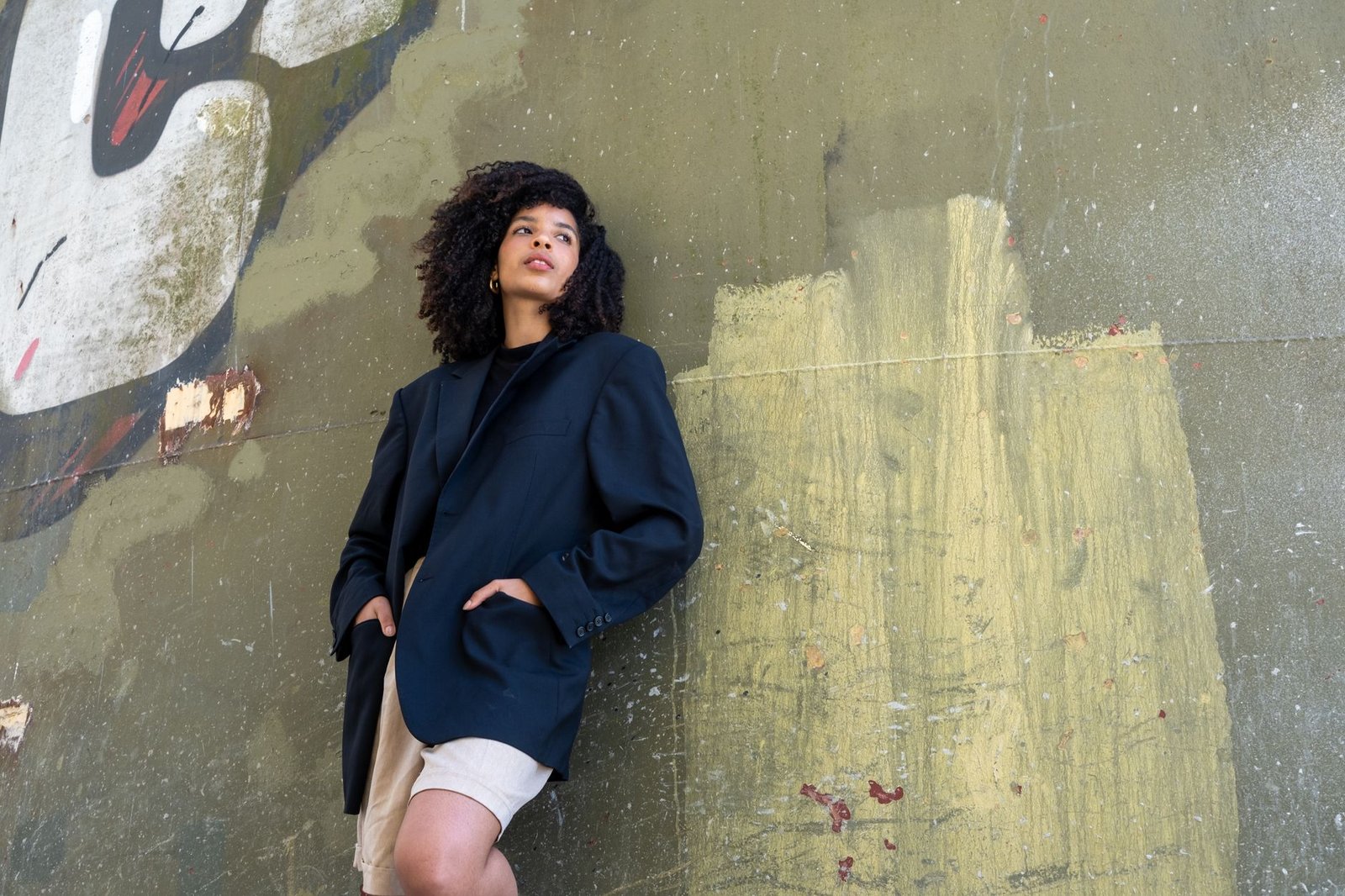
A longline black blazer worn open over a simple white tee, slim black straight-leg jeans with a slight crop at the ankle, and simple black Chelsea boots. A minimal black bag. This is the longline blazer in its most everyday and most effortless context — the extended length reads as a distinctive fashion choice against the simple jeans-and-tee base without requiring elaborate occasion-appropriate styling.
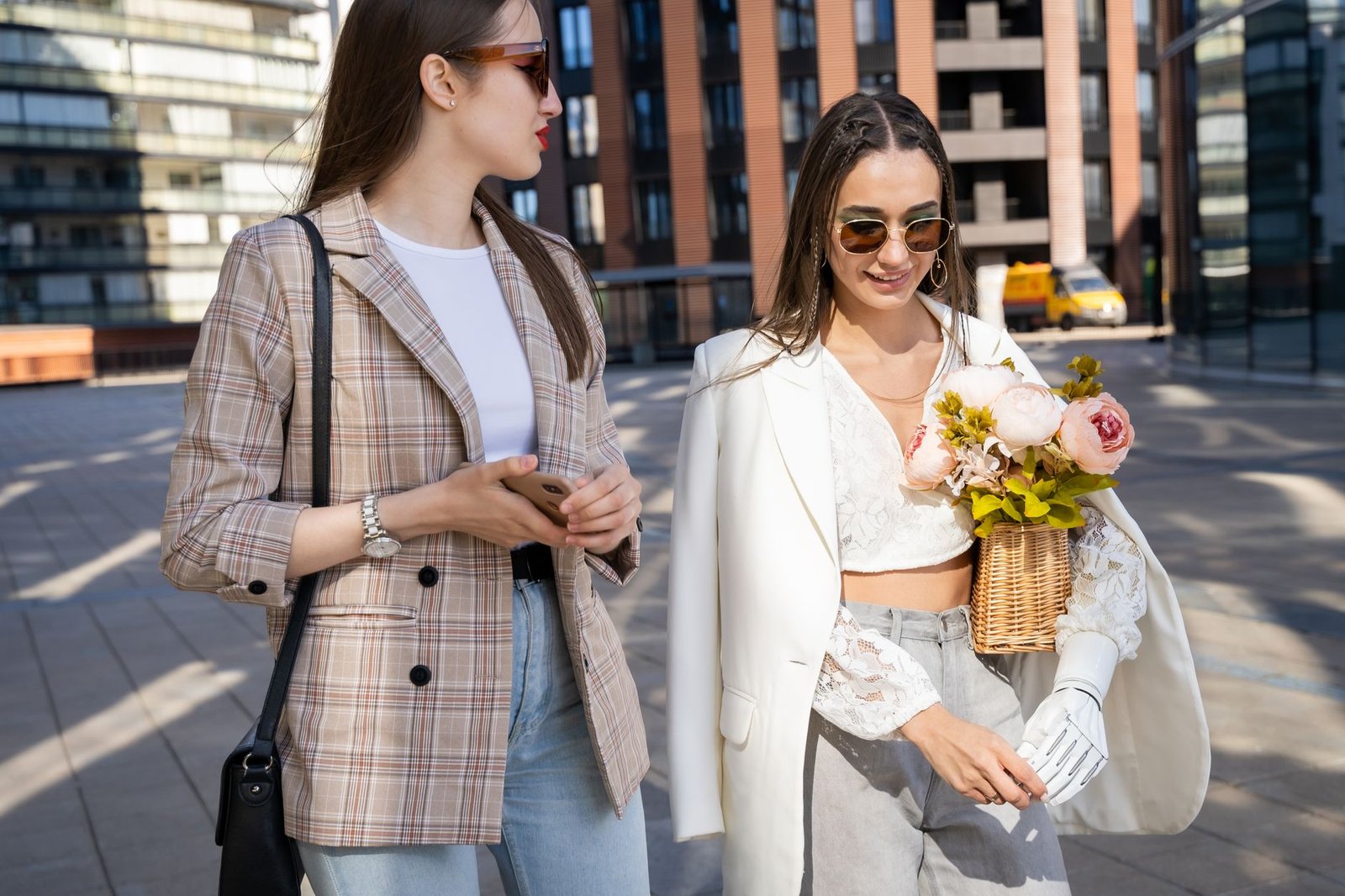
A plaid or check longline blazer worn over a simple turtleneck and tailored trousers in a colour extracted from the blazer’s pattern. Heeled loafers and a structured bag. The longline check blazer is one of fashion’s strongest single-piece statement approaches in the tailoring category — the print communicates personality, the length communicates fashion awareness, and the clean surrounding pieces allow both to read clearly. According to InStyle, the longline blazer has been identified as one of the highest-investment, highest-return pieces in contemporary women’s fashion — its versatility across multiple wearing modes (dress, open jacket, belted cover-up) means a single quality piece earns its wardrobe space across far more occasions than a conventional-length blazer.
Common Mistakes
The most common longline blazer mistake is wearing one that is too small in the shoulders — which causes the extended body length to pull across the back and create unflattering diagonal wrinkles that run from the shoulder seam downward. The longline blazer’s length amplifies any shoulder fit issue more visibly than a standard blazer’s length would. The shoulder seam should sit precisely at the shoulder point; if it’s pulling inward or sliding outward, the blazer doesn’t fit correctly regardless of how good the length is.

The second mistake is wearing a longline blazer over bottoms that are the same length as the blazer’s hem — where the trouser hem and the blazer hem meet at the same point on the leg, creating an ambiguous visual boundary that makes the outfit’s proportion read as confused rather than deliberate. The bottom beneath a longline blazer should either end well above the blazer’s hem (showing legs between the blazer hem and the shoe) or extend well below it.
Shopping Considerations
The construction quality of a longline blazer is particularly important because the extended length means any structural weakness — poor canvas interfacing, inadequate shoulder padding, thin lining — is amplified across a larger surface area. A quality longline blazer should have the same structural quality as a conventional suit jacket: firm shoulder construction, quality canvas or fused interfacing through the body, a clean full lining, and high-quality buttons. The fabric should have enough body to maintain the jacket’s shape when worn open without sagging.
Seasonal Considerations

The longline blazer is a year-round piece that shifts in utility by season. In spring and autumn, it functions as a genuine outer layer — warm enough for mild temperatures without the weight of a coat. In summer, a light linen or unlined longline blazer works as an evening cover-up or an indoor layer. In winter, a longline blazer worn under an overcoat provides an extra structured layer that reads as a fashion choice rather than simply thermal necessity.
Frequently Asked Questions
How long should a longline blazer be?
A longline blazer is typically defined as any blazer that extends below the conventional hip-skimming length — ranging from just below the hip (which reads as slightly longer than standard rather than truly longline) through to the knee (which reads as a coat-length blazer). The most widely worn and most broadly flattering longline length falls at mid-thigh — long enough to clearly read as a proportionally distinct silhouette, short enough to allow bottoms to remain clearly visible and well-proportioned beneath it.
What body types suit a longline blazer?
A longline blazer is particularly flattering for taller figures, where the extended length has space to develop its proportional distinction without overwhelming the frame. For petite women, a longline blazer can read as disproportionately large — choosing a length that falls at the upper thigh rather than the knee, and pairing with heeled shoes, maximises the extended-length effect without losing the vertical proportion. For all figures, the blazer-as-dress approach (worn belted as the outfit’s only layer) is the most universally flattering because the belt creates waist definition that prevents the length from reading as simply oversized.
Conclusion
The longline blazer is one of fashion’s most architecturally interesting and most wearing-mode-versatile pieces — it functions as a jacket, as a coat substitute, and as a dress depending on how it is styled, making it one of the highest cost-per-wear investments available in the tailoring category. Invest in shoulder fit and construction quality, explore all three wearing modes, and allow the extended length to create the proportional statement that standard-length tailoring cannot achieve.