How to Style a Bomber Jacket: Streetwear Outfit Ideas for Women
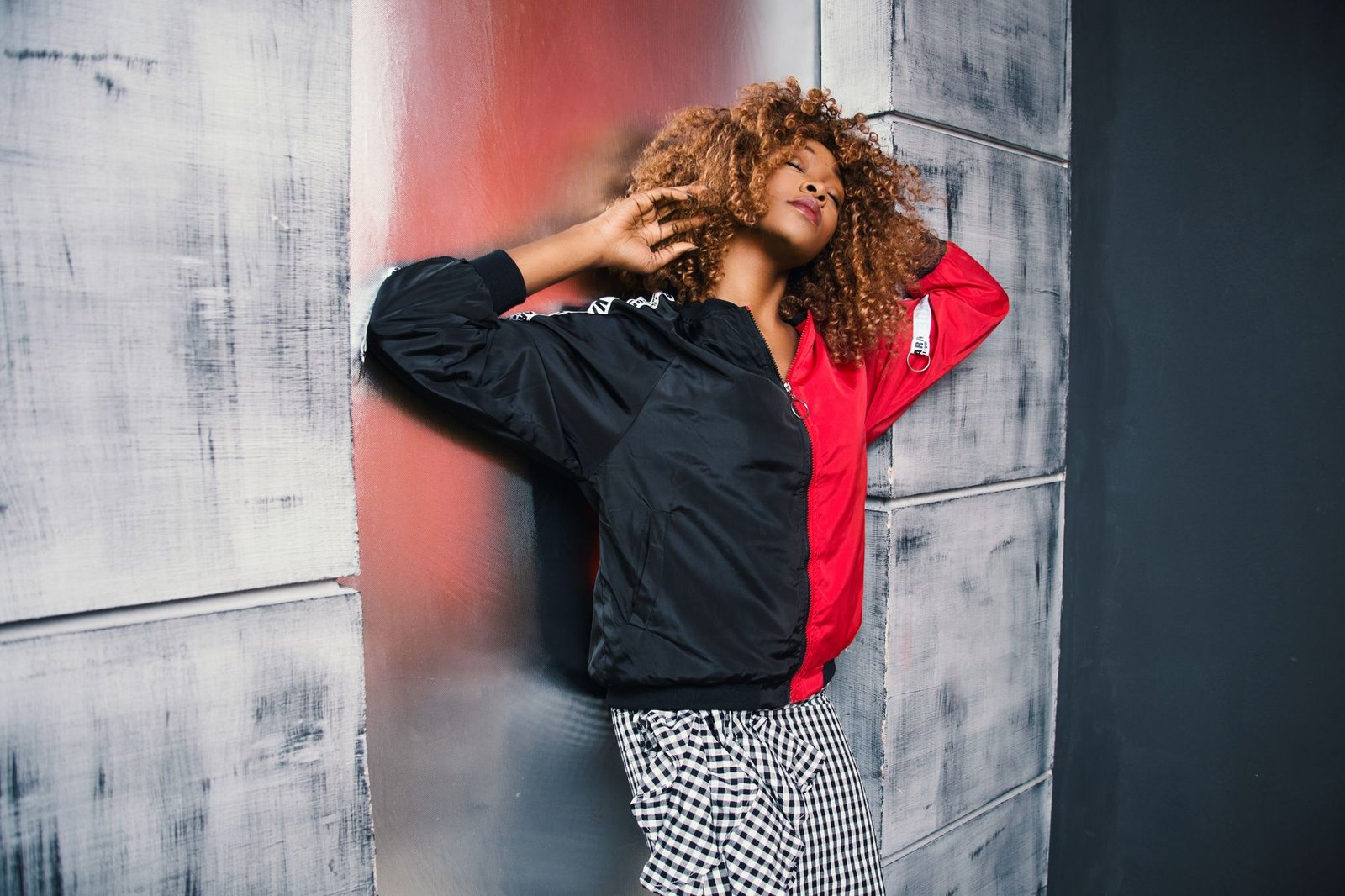
The bomber jacket — a short, zip-front jacket with ribbed cuffs and hem, originally derived from military aviation outerwear — is one of the most culturally loaded pieces in streetwear’s history. From its origins in 1950s military surplus culture through its adoption by hip-hop, punk, and mod subcultures, the bomber jacket has accumulated a visual language that makes it immediately communicative: it reads as cool, youth-culture-aware, and decidedly non-corporate. Yet its simple, body-skimming silhouette is also one of fashion’s most flattering and most versatile outer layers.
Unlike the cargo jacket or the utility jacket, the bomber’s defining feature is its proportional neatness — it ends at the hip, has no excessive pockets or hardware, and sits clean against the body. This restraint is precisely what makes it so versatile: it adapts to the outfit beneath it rather than imposing its own heavy visual language onto the look.
Trend Overview
The bomber jacket has remained one of streetwear’s most consistent pieces across every trend cycle — in satin, in flight-inspired MA-1 nylon, in premium leather, and in embroidered souvenir variants that reference Japanese sukajan tradition. Its current fashion moment benefits from the broader revival of utility and workwear-influenced dressing, and from a renewed interest in the specific kind of cool that cannot be manufactured with overtly trend-driven pieces. The best streetwear jackets of any given season almost always include a bomber variant.
Contemporary women’s styling has also moved the bomber jacket convincingly beyond its masculine-heritage associations into genuinely feminine outfit contexts — worn over dresses, paired with midi skirts, and layered under oversized coats as an inner jacket.

Styling Recommendations
The Classic Streetwear Formula
A satin or nylon bomber jacket over a graphic tee tucked into straight-leg jeans with clean sneakers is the most widely worn and the most immediately recognisable bomber outfit approach. This is the jacket in its most native context — the graphic tee references visual culture, the jeans and sneakers ground the look in casual streetwear territory. Choosing a bomber in a premium fabric (satin, quality nylon, velvet) or in a colour that relates to the graphic tee’s palette is how this familiar formula becomes genuinely considered rather than simply default.
Elevated Pairings
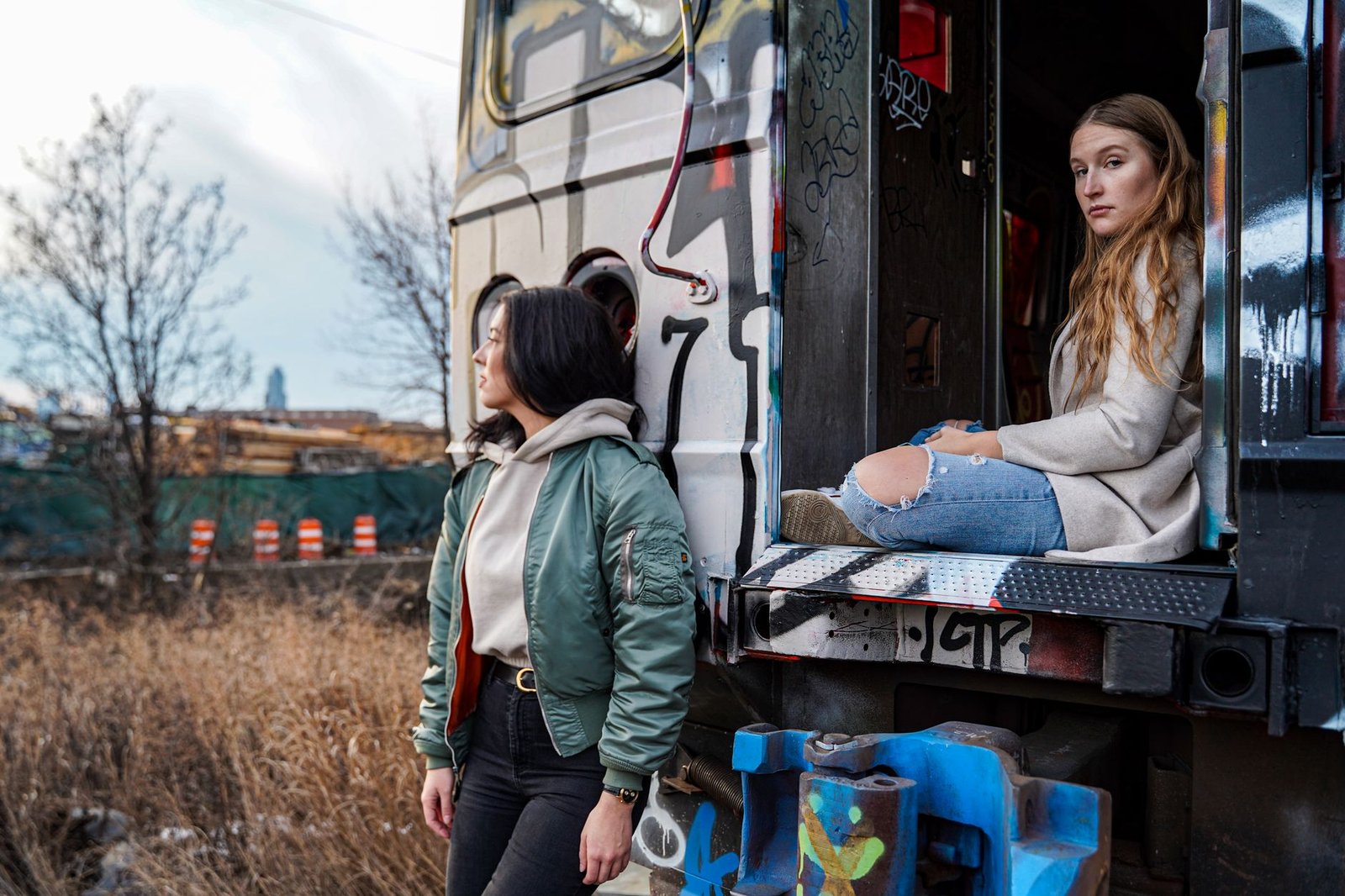
A slim-cut leather or premium satin bomber over a fitted turtleneck and straight-leg trousers with ankle boots creates a smart-casual approach that references the jacket’s cool heritage while sitting in a more refined register. The key is the bomber’s fit — a very oversized bomber in this context reads as too casual; a slim or regular-fit bomber tucked in at the profile reads as considered. This is the approach referenced most consistently in workwear-meets-streetwear styling contexts.
Layered Over Dresses
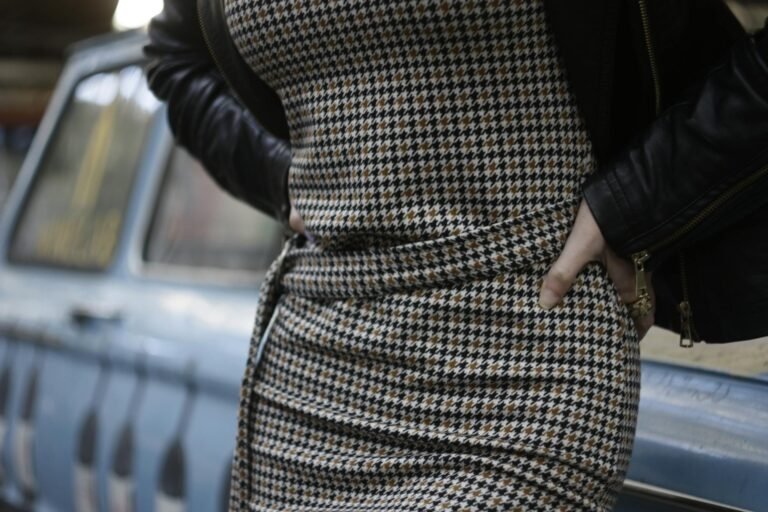
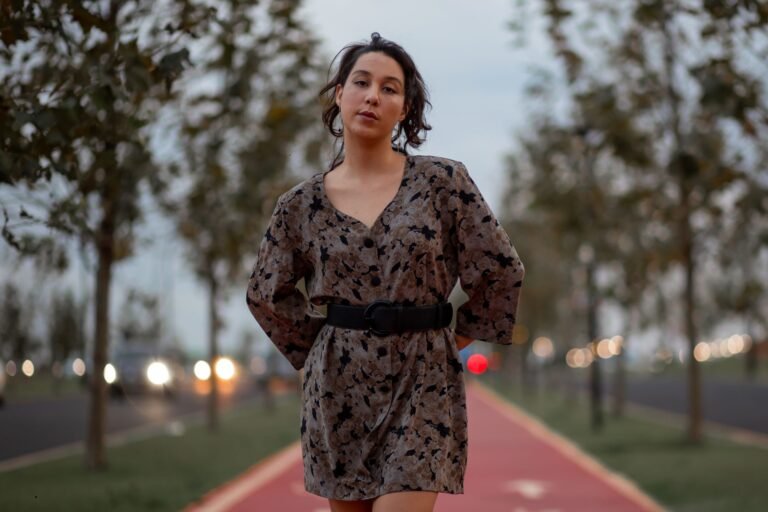
A bomber jacket over a slip dress or a midi dress — one of fashion’s most reliably interesting proportion plays — creates a feminine-masculine tension that reads as deliberately fashion-conscious. The bomber’s structured hem against the dress’s flow is the combination’s entire point. With heeled sandals or chunky boots, this is one of the most photographed contemporary bomber approaches.
Outfit Ideas
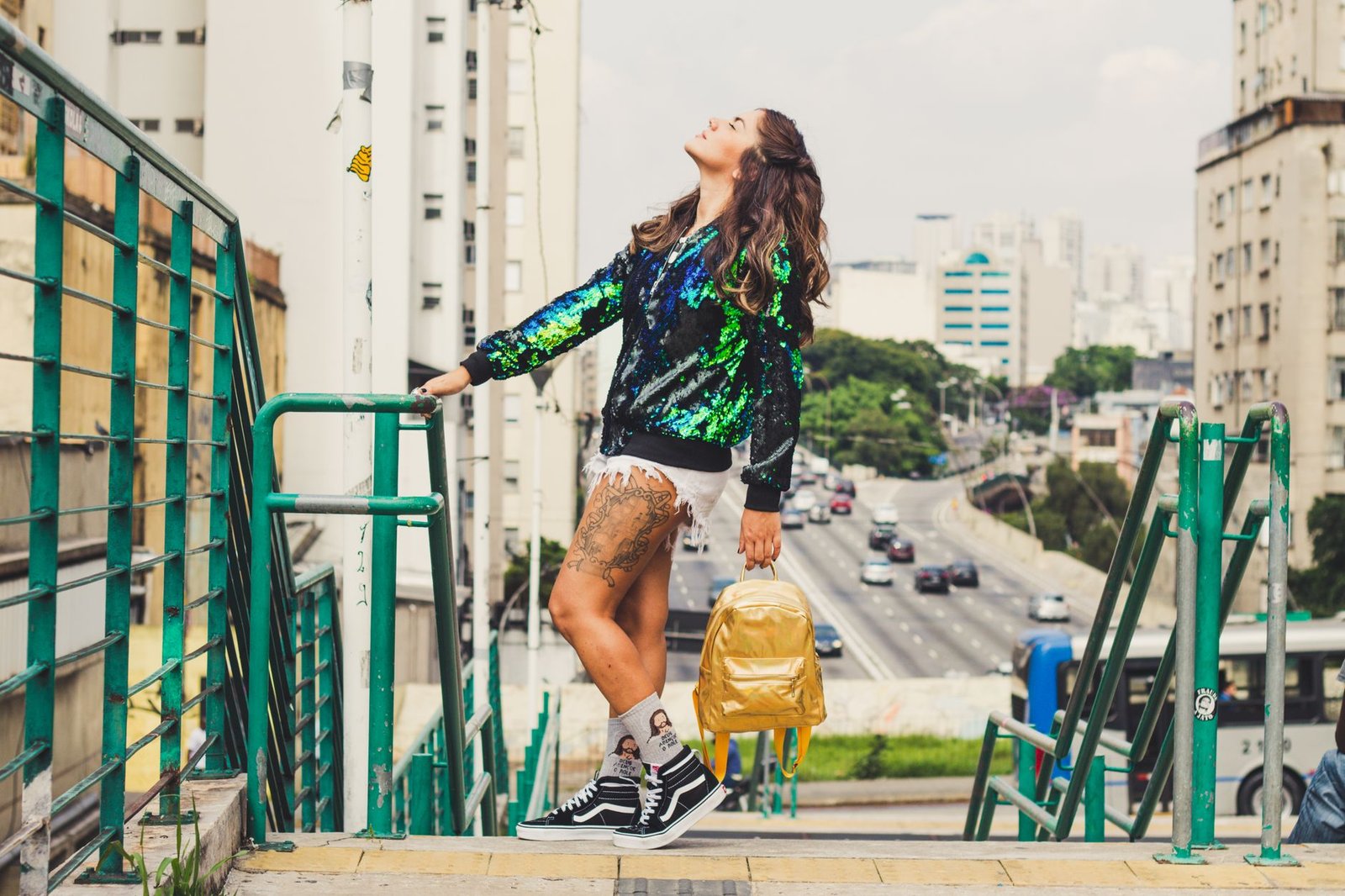
A black satin bomber over a white fitted tee and black straight-leg jeans, with white Air Force 1s or similar clean leather sneakers. A small silver chain necklace. This is the bomber at its most effortlessly assembled and most reliably strong — the black and white palette lets the satin’s sheen do all the visual work. For more streetwear for women outfit formulas, the black satin bomber is the most versatile starting point in the jacket category.
An olive green MA-1 nylon bomber over a beige ribbed turtleneck, cargo trousers, and chunky boots. Add a crossbody bag with functional detailing. This references the utilitarian spectrum of streetwear — military, functional, considered — and creates a cohesive tonal look where every piece belongs to the same design family.
A floral embroidered souvenir bomber (sukajan-inspired) over a plain black fitted tee and slim black trousers with clean white sneakers. The bomber is the entire outfit’s focus — the plain surrounding pieces allow the embroidery to read at full intensity. This is the approach the streetwear layering guide identifies as the most effective single-statement-piece formula in the jacket category.
Common Mistakes
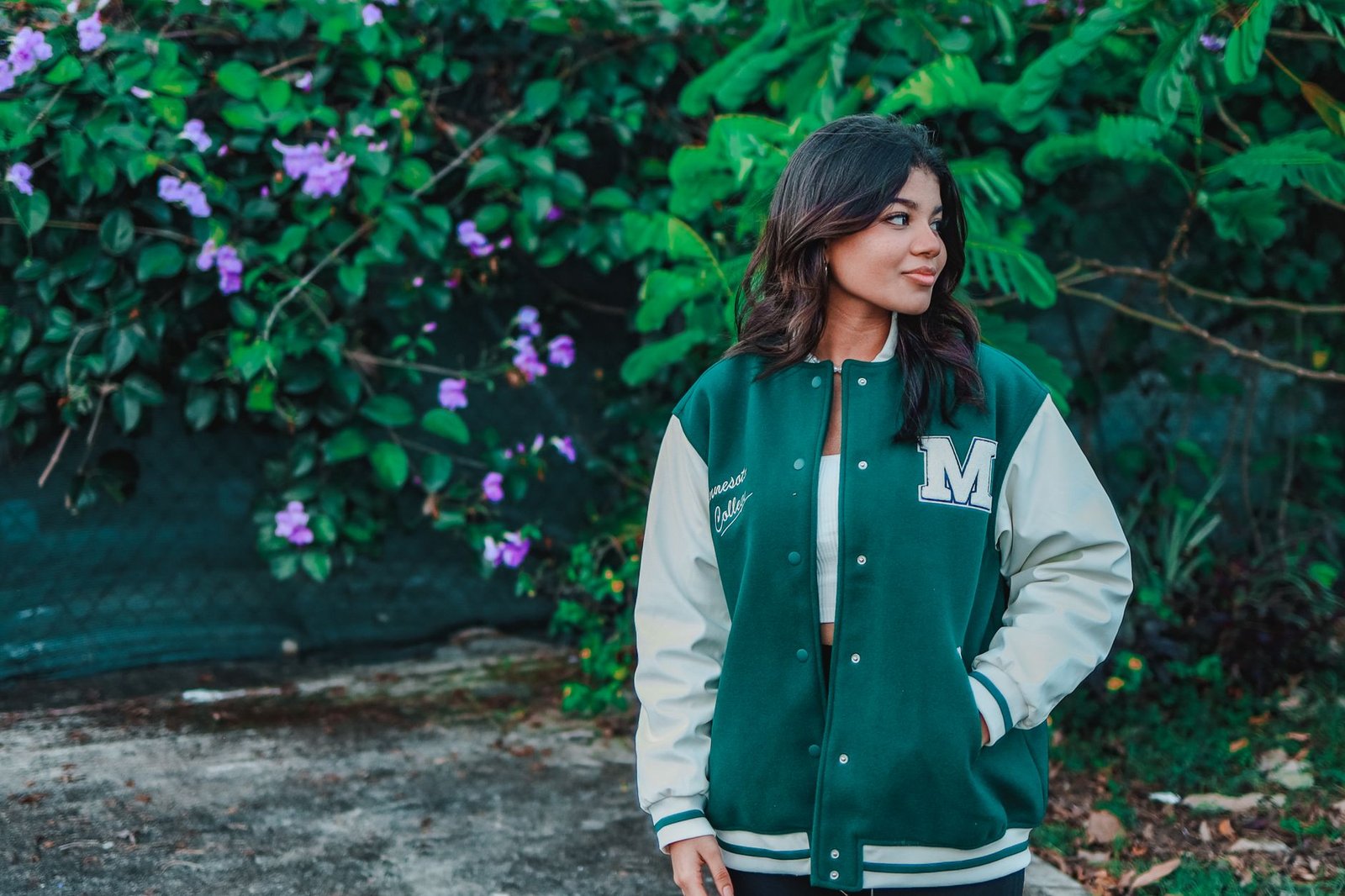
The most common bomber jacket mistake is choosing a size that is too large — the bomber’s defining silhouette is its neat, hip-length proportional relationship with the body. A very oversized bomber loses this proportional precision and reads as simply a large short jacket rather than a deliberate silhouette choice. If intentional oversizing is the goal (as in some high-fashion interpretations), go two full sizes up and style with cropped or slim bottoms that counterbalance the jacket’s added volume above.
The second mistake is pairing a bomber jacket with bottoms that are too formal — stiff tailored trousers in a formal suiting fabric, for instance, create a register mismatch that makes neither piece read correctly. The bomber exists in a casual-to-smart-casual range; its bottoms should sit in the same range. Quality denim, technical joggers, and slim casual trousers are the bomber’s most natural partners.
Shopping Considerations
The bomber jacket’s quality is most visible in the ribbed trim — the cuffs, hem, and collar ribbing should be tight, elastic, and consistent in colour and texture with the jacket’s body. A poor-quality ribbing that has already begun to stretch or loosen is the most immediate quality signal. The zip should run smoothly and sit flat against the placket when closed. Satin bombers should have a smooth, even surface without obvious weave irregularities; nylon MA-1 bombers should feel substantial rather than thin and papery. According to Highsnobiety, the bomber jacket is consistently rated among streetwear’s most enduring silhouettes, with quality construction being the single most important factor separating pieces that last decades from those that wear out within a season.

Seasonal Considerations
The bomber jacket sits most naturally in spring and autumn, where its light-to-medium insulation is appropriate without requiring under-layering. In summer, a lighter satin or silk bomber works as an evening layer. In winter, a bomber worn under a longer overcoat as an inner insulating layer is one of the strongest cold-weather streetwear approaches — the bomber’s shorter length visible below the coat’s hem creates a deliberately layered silhouette.
Frequently Asked Questions
What is the difference between a bomber and a varsity jacket?

Both share the ribbed-cuff-and-hem construction and the zip or button-front closure, but a varsity jacket (also called a letterman) is specifically characterized by its colour-blocked wool body with leather sleeves and its college or sports team insignia. A bomber jacket is a broader category — including satin, nylon, leather, and embroidered versions — without the specific colour-blocking and insignia of the varsity. The varsity jacket sits more firmly in Americana and sports culture; the bomber jacket spans military, Japanese souvenir culture, and contemporary streetwear.
Can a bomber jacket look professional?
A slim-fitting leather bomber in black or dark navy, worn over a fitted turtleneck, tailored trousers, and heeled ankle boots, reads as professional and considered in creative industry environments. It is too casual for traditional corporate settings. The key to the most professional bomber interpretation is fit (slim, not oversized), fabric (leather or quality satin rather than thin nylon), and surrounding pieces (tailored rather than casual). A bomber jacket with a blazer-level outfit underneath it can read as a deliberate, fashion-intelligent professional statement rather than a casual default.
Conclusion
The bomber jacket is streetwear’s most adaptable outer layer — short enough to show the outfit beneath it, structured enough to add intentional shape to any combination. Choose quality in the fabric and trim, get the fit right, and allow the jacket’s cultural history to do the communicating while the outfit beneath it does the rest of the work.