
Art and Fashion History: How Art Movements Have Shaped the Way We Dress
The Relationship Between Art and Fashion
Fashion and art have maintained a continuous creative dialogue throughout the modern period. This relationship runs in multiple directions: fashion designers have drawn directly on the visual vocabulary of contemporary art movements to create new clothing aesthetics; artists have treated fashion and the body as materials for creative practice; and the cultural institutions of art and fashion — galleries, fashion weeks, publications, collectors — have increasingly overlapped and cross-pollinated. Understanding how art movements have shaped fashion is not an academic exercise — it is the foundation for understanding why clothes look the way they do at any given moment.
Cubism and the Geometry of Dress (1910s–1920s)
Cubism, developed by Picasso and Braque in the first decades of the 20th century, shattered the conventional perspectival representation of objects by showing multiple viewpoints simultaneously and fragmenting forms into geometric planes. The visual language — fractured geometry, overlapping planes, the abandonment of mimetic representation — entered fashion through the textile design and dress making of the 1910s and 1920s.
Sonia Delaunay, a painter associated with Orphism (a colour-focused offshoot of Cubism), is the most direct bridge between Cubist visual language and fashion. Her simultaneous fabric designs applied the bold geometric colour patterning of her paintings to fashion textiles, creating garments that functioned as wearable abstract art. Elsa Schiaparelli, working in the 1920s–1940s, also drew explicitly on Cubist and Surrealist visual strategies in designing garments that played with spatial perception and conventional form.
Surrealism and Fashion as Psychological Experience (1920s–1940s)
Surrealism — the movement that used the logic of dreams, the unconscious, and psychological disruption as creative material — had one of the most direct and sustained relationships with fashion of any 20th century art movement. The connection was personal as well as aesthetic: Salvador Dalí, Man Ray, and Meret Oppenheim all collaborated with fashion designers or created garments and accessories that functioned as wearable Surrealist objects.
The Elsa Schiaparelli–Salvador Dalí collaboration produced some of the most famous objects in fashion history: the Lobster Dress (1937), the Shoe Hat (1937), the Tears Dress printed with an illusion of torn flesh. These pieces used the Surrealist technique of uncanny juxtaposition — placing an object in an unexpected context to defamiliarise it — and applied it to the body. The influence of Surrealist visual strategies on fashion’s long history of conceptual and shock-driven design is impossible to overstate.
Abstract Expressionism and the Liberation of Form (1940s–1950s)
Abstract Expressionism — the American movement centred on the gestural, spontaneous, large-format painting of Pollock, De Kooning, Franz Kline, and others — established the principle that the act of mark-making and the emotional directness of the gesture were the primary content of art, rather than any depicted subject. This shift in artistic values — toward personal expression, spontaneous process, and emotional authenticity — influenced the cultural climate in which postwar fashion operated.
Cristóbal Balenciaga’s architectural garments of the 1950s share an Abstract Expressionist sensibility in their prioritisation of form over decorative surface: the sculpture of the garment, its three-dimensional structure in space, became the primary aesthetic content. The shift away from elaborate surface decoration toward bold, pure form in postwar couture mirrors the shift in contemporary painting from representational content toward pure formal and gestural expression.
Pop Art and the Consumer Object as Art (1950s–1970s)
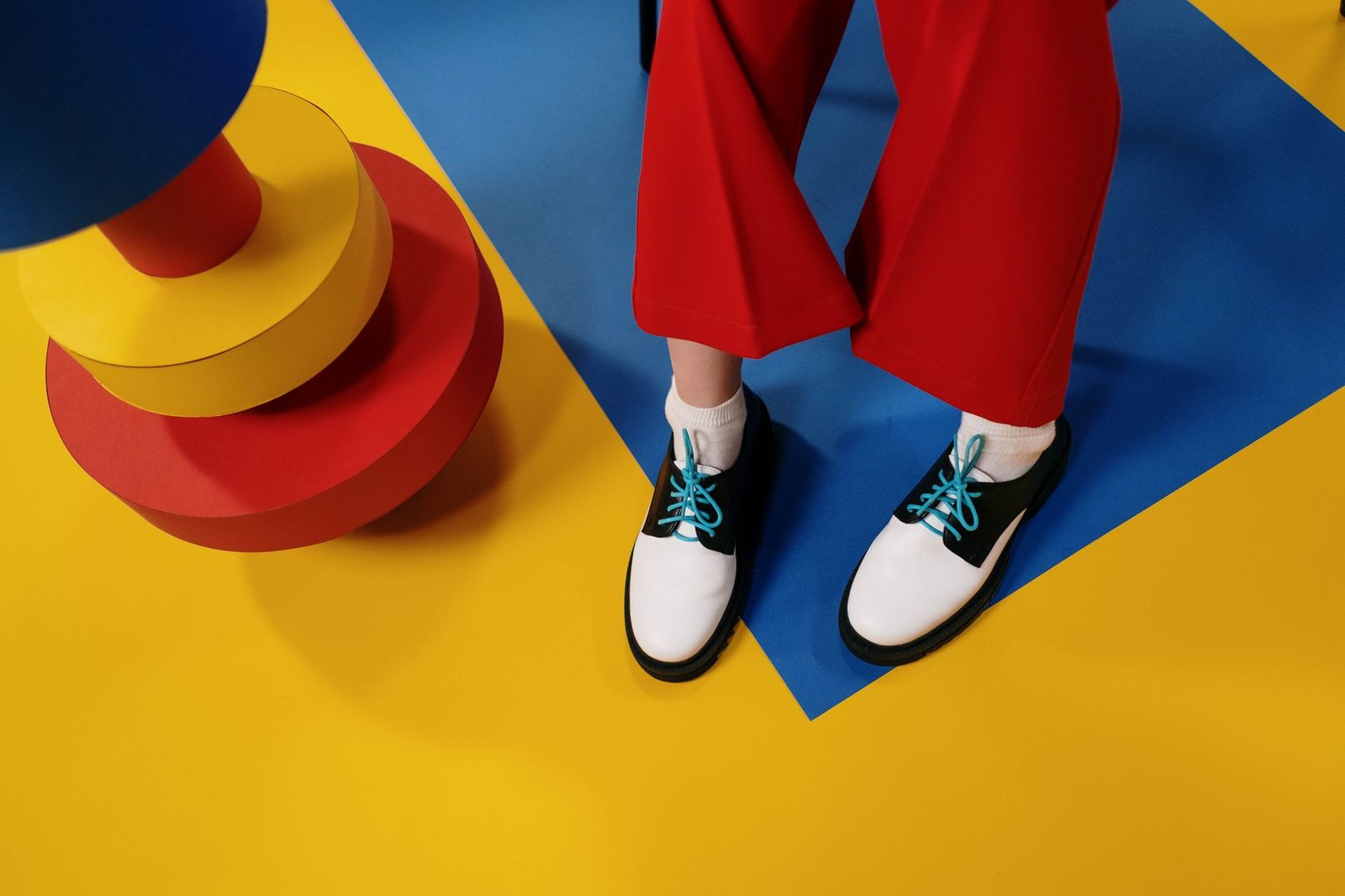
Pop Art — Warhol, Lichtenstein, Oldenburg, Jasper Johns — made popular culture, mass production, and consumer objects the subject of high art, intentionally collapsing the hierarchy between commercial imagery and serious artistic expression. The aesthetic language of Pop Art — bold colour, flat graphic reproduction, the imagery of brands and packaging and celebrity — translated almost directly into fashion.
Yves Saint Laurent’s Mondrian dress (1965) — a shift dress in the primary colour blocks of Piet Mondrian’s grid paintings — is the most cited example of high fashion’s direct adoption of fine art visual language. The dress was so precisely referential that it functioned essentially as a wearable reproduction of the painting.
Andy Warhol’s own fashion work — the paper Brillo Box dresses, the various commercial image reproductions — made the relationship between Pop Art and fashion explicit. The subsequent history of graphic fashion design, from streetwear graphic tees to the luxury fashion logomania waves of subsequent decades, owes a direct debt to Pop Art’s collapse of the commercial/artistic boundary.
The Pop Art movement’s collapse of commercial imagery and high art directly established the graphic print as a legitimate artistic statement — a lineage that runs through to the contemporary graphic tee, where printed imagery continues to function as both cultural signal and wearable art reference.
Minimalism and the Reduction of Fashion (1960s–1980s)
Minimalist art — Donald Judd, Dan Flavin, Agnes Martin — pursued the elimination of all subjective gesture, decorative surface, and referential content in favour of pure form, pure material, and spatial relationship. The minimalist aesthetic principle — that less is not just more but is the only valid more — found direct expression in Japanese and European fashion design from the late 1970s onward.
Rei Kawakubo (Comme des Garçons) and Yohji Yamamoto brought Japanese minimalist principles to Paris fashion in the early 1980s, presenting monochromatic, often black, deconstructed, and visually austere garments that challenged every assumption of conventional fashion presentation. Helmut Lang’s work in the 1990s applied a harder-edged minimalism — clean construction, minimal surface detail, architectural precision — that influenced an entire generation of designers and remains the foundation of contemporary luxury minimalism.
Street Art and Graffiti Influence on Fashion (1970s–Present)

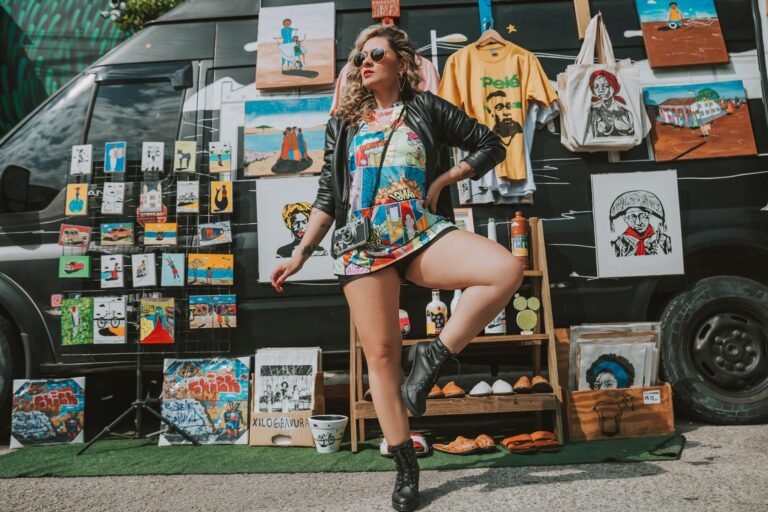
The visual language of New York street art and graffiti — bold lettering, tag iconography, the compressed and expressive mark-making of the spray can — entered fashion through the crossover between hip-hop culture, graffiti art, and fashion in the 1980s and 1990s. Jean-Michel Basquiat’s painting practice, emerging from graffiti under the tag SAMO, created a visual language of raw, energised mark-making that has been referenced in fashion continuously since his death in 1988. Supreme’s ongoing graphic programme, which has directly collaborated with major artists from Basquiat to Kaws to Takashi Murakami, maintains the street art–fashion connection at the highest levels of cultural relevance.
The archive pieces from Supreme’s early collaborations with Basquiat and Kaws now circulate as collectible objects in the vintage streetwear market, where the art-fashion crossover is reflected in resale values that treat graphic garments as cultural artefacts rather than simple clothing.
Digital Art and Computational Aesthetics (2000s–Present)
As digital technology became the primary medium for image creation, communication, and cultural distribution, its visual language began to influence fashion design in ways that remain increasingly prominent in 2026. The gradient aesthetics of interface design, the glitch art movement’s corrupted digital imagery, the 3D rendering quality of CGI fashion, and the visual language of video games and digital media are all now active references in contemporary fashion design.
Virgil Abloh’s Off-White — with its quotation-mark graphic language derived from design software and typeface aesthetics — is the most commercially successful example of digital design culture entering fashion. The broader wave of computational aesthetics — pattern generation, 3D form, data visualisation as design — is increasingly present in fashion at every level.
The relationship between art movements and fashion design has been a continuous and documented thread throughout the history of both disciplines. WWD’s feature on fashion’s art inspirations and muses traces how designers have drawn from painters, sculptors, and artistic movements across the full arc of 20th and 21st century fashion.
Frequently Asked Questions
How has art influenced fashion history?
Art movements have influenced fashion through their visual vocabularies (Cubist geometry, Pop Art flat graphics, Minimalist reduction), their conceptual strategies (Surrealist juxtaposition, Expressionist gesture), and their cultural authority as frameworks for understanding what is important at a given moment. The most direct influences have come through deliberate designer-artist collaborations and through the shared cultural climate in which both art and fashion are produced.
Which artists have most influenced fashion design?
The artists with the most measurable direct influence on fashion include Piet Mondrian (geometric colour blocks in 1960s fashion), Andy Warhol (Pop Art graphic language), Salvador Dalí (Surrealist fashion objects with Schiaparelli), Jean-Michel Basquiat (raw graphic language in streetwear), and Sonia Delaunay (abstract colour in textile design). The influence of Abstract Expressionism and Minimalism is more diffuse but equally foundational to the mid-20th-century fashion shift toward pure form.