How to Style Cardigans: 14 Outfit Ideas for Every Season and Occasion
Why the Cardigan Is One of Fashion’s Most Versatile Pieces
The cardigan is fashion’s most underrated versatile garment — a layering piece that works across every aesthetic, every season, every occasion category, and every body type. Unlike jumpers or hoodies, the cardigan’s open front allows it to function simultaneously as a garment (worn closed) and as a layer (worn open); its buttons or clasps allow it to be worn at any point between fully closed and fully open.
Unlike coats, cardigans are light enough for indoor wearing and fine enough for social and even semi-formal contexts. And unlike most fashion garments, the cardigan’s hundred-year fashion history means it carries strong cultural references across multiple aesthetic traditions simultaneously.
Types of Cardigans and How to Style Each
Oversized Cardigan
The oversized cardigan — significantly larger than body-fitted, with long sleeves, generous hem length, and a relaxed or even slightly formless silhouette — is the current dominant cardigan type in fashion. Its styling logic inverts the standard layering principle: the oversized cardigan is the large, voluminous outer element that pairs best with fitted or simple inner pieces.
A fitted tee or fitted body suit under an oversized cardigan, with straight jeans or mini skirt, allows the cardigan’s volume and texture to be the outfit’s visual focus. Worn as a coat alternative in transitional weather, over a simple dress or trousers, the oversized cardigan provides both warmth and a distinctive silhouette.

Fitted or Vintage Cardigan
A fitted, body-following cardigan — either new in a fitted cut or vintage (most older cardigans are cut closer to the body than contemporary oversized styles) — pairs best with looser or more relaxed pieces below and around it. A fitted vintage cardigan tucked into high-waisted wide-leg trousers, or worn over a simple tee with a midi skirt, creates an outfit that uses the fitted cardigan’s structured quality to anchor a more relaxed outfit below. Particularly effective for academia, preppy, and classic/vintage aesthetic approaches.
Long Cardigan
A long cardigan that extends to the knee or below functions somewhere between a cardigan and a coat — its length creates a specific silhouette that is particularly effective over dresses and skirts where the cardigan extends the outfit’s vertical line. A long cardigan in a neutral or complementary tone worn over a mini dress creates the most dramatic use of the long cardigan’s length effect. Worn over straight jeans and a tee, a long cardigan provides the same visual elongation in a more casual context.
Cropped Cardigan
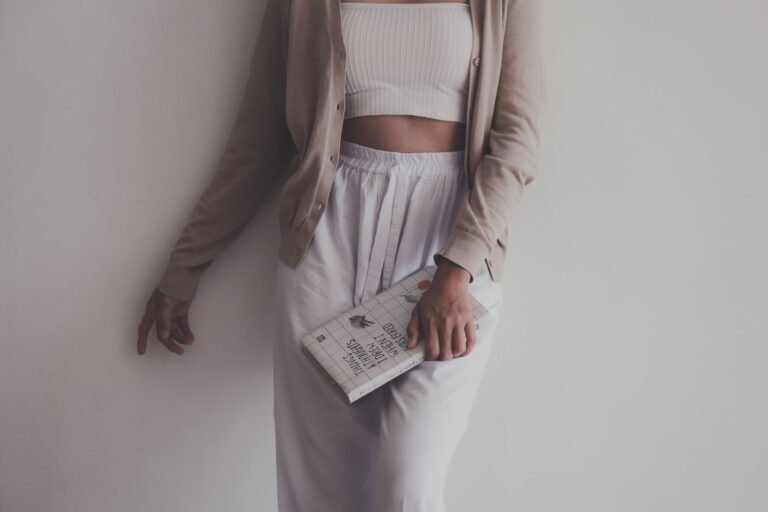
A cropped cardigan — ending at or above the waist — pairs most naturally with high-waisted bottoms where the gap between the cardigan’s hem and the trouser or skirt waistband is minimised or eliminated. The cropped cardigan creates a defined waist emphasis by ending at exactly the point where the bottom piece begins; it works particularly well with high-waisted wide-leg trousers and midi skirts. Often worn open or half-buttoned to allow the inner piece to be visible.
Button-Down Cardigan as Shirt
A fine-knit or thin button-down cardigan worn fully buttoned as if it were a shirt — tucked into trousers or skirts, or half-tucked — is a particularly versatile styling approach that treats the cardigan as the outfit’s primary top rather than as a layer. This works best with fine-gauge knitwear that lies flat and behaves like a shirt fabric rather than a thick, textured knit.
Cardigan Outfit Ideas
Oversized Cardigan and Mini Skirt

An oversized, textured or chunky-knit cardigan in a neutral or warm tone over a fitted mini skirt (denim, leather, or solid colour), with chunky boots or ankle boots. The combination’s visual interest comes from the size contrast between the oversized upper half and the minimal lower half — the cardigan’s volume is balanced by the minimal coverage of the mini skirt. Add thin tights for warmth in colder contexts.
Cardigan Over Collared Shirt
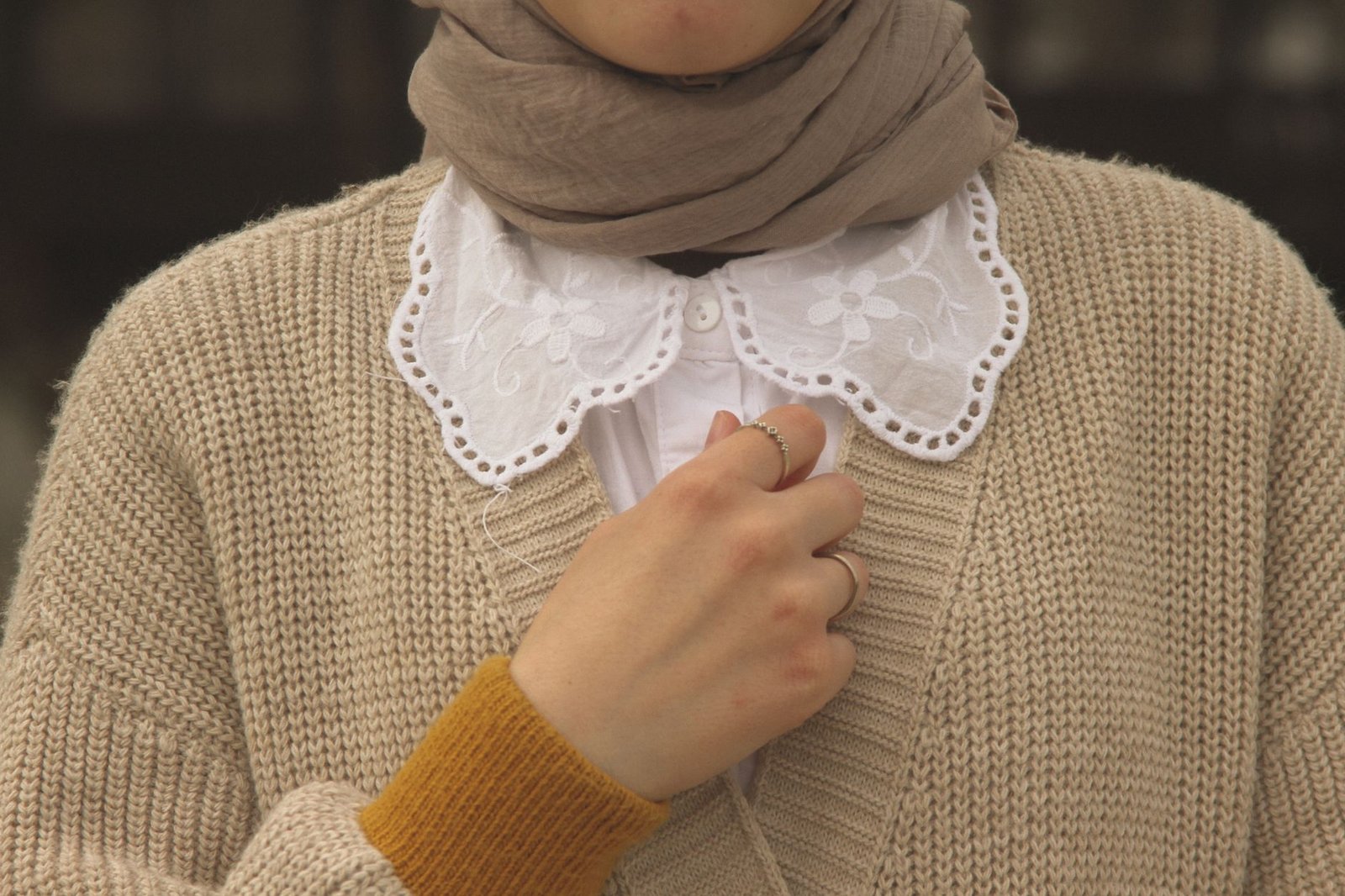
A fitted or slightly oversized cardigan worn over a collared shirt — the collar visible at the neckline, the shirt cuffs visible at the wrist — with straight or wide-leg trousers and loafers. This is the most academic and classic cardigan styling — the layered collar communicates scholarly or preppy dressing associations that are strongly aligned with light academia, dark academia, and preppy aesthetics.
Crochet or Open-Knit Cardigan as Layer
A crochet or open-knit cardigan worn open over a bikini top, slip dress, or fitted tee — the through-visibility of the open knit creating a layered effect where both the cardigan and the piece beneath are simultaneously visible. This styling approach is particularly strong in warm weather and in boho and coastal contexts where the open-knit’s texture and translucency are appropriate to the setting.
Fitted Cardigan Tucked In
A fine-knit fitted cardigan tucked fully into high-waisted straight or wide-leg trousers, with the waistband visible above the cardigan’s hem. The tucked-in cardigan creates a clean, defined waist point and a polished, intentional silhouette. Most effective with high-waisted trousers where the tuck creates a clear separation between the upper and lower halves of the outfit.
Long Cardigan as Coat
A long, heavy-knit cardigan worn as outerwear in transitional weather over a dress or a tee-and-trousers combination, belted at the waist to create a defined silhouette. A long cardigan belted at the waist functions as a coat-shaped layer that adds warmth without the weight of a conventional coat, and maintains the softness and texture of the cardigan’s fabric rather than shifting into outerwear character.
For the six cardigan trends that fashion editors are backing right now, Who What Wear’s cardigan trends guide covers the silhouettes, closures, and colour stories that define contemporary cardigan dressing.
Cardigan and Slip Dress
An oversized or relaxed cardigan in a complementary or contrasting colour over a slip dress — the cardigan’s texture and volume against the slip’s smooth, lightweight fabric creates a textural contrast that is particularly effective. In earthy or neutral tones for boho or vintage character; in bold colour or pattern for a more fashion-forward approach. With flat sandals or ankle boots.
Academia Cardigan Layered Look
An oversized cardigan in a warm neutral (camel, cream, or charcoal) over a striped or solid long-sleeve shirt, with pleated midi or cropped trousers and leather loafers. The multiple warm layers build the visual complexity of the light or dark academia aesthetic without requiring any garment beyond basics — the cardigan over shirt over trouser combination is the academic aesthetic’s most complete and sophisticated outfit formula.
Cardigan Styling Tips
Push Up the Sleeves
Pushing the sleeves of an oversized or slightly large cardigan up to the forearm (rather than wearing them at full length) instantly creates a more intentional and less shapeless appearance. The pushed-up sleeve reveals the forearm, which breaks the heavy mass of the oversized cardigan’s fabric and adds a deliberately casual styling signal.
The Half-Tuck
Tucking in only the front centre of a cardigan — the half-tuck approach — creates a more considered and less casual appearance than wearing it fully untucked, without the full formality of a complete tuck. Particularly effective with fitted and vintage cardigans that are slightly large in the body.
Frequently Asked Questions
How do you style an oversized cardigan?
Oversized cardigans work best with fitted or minimal inner pieces: a fitted tee or bodysuit under the cardigan, with a mini skirt or fitted straight jeans, creates proportion balance between the cardigan’s volume and a slimmer lower half. Alternatively, wear over a simple dress as a coat-alternative layer. The key is ensuring the pieces beneath the oversized cardigan are simpler and less voluminous than the cardigan itself.
Can you wear a cardigan to work?
Yes — cardigans are among the most workplace-versatile pieces. A fine-knit or fitted cardigan over a collared shirt, or a simple cardigan tucked into tailored trousers, is appropriate for most smart-casual and business-casual workplace dress codes. Avoid heavily textured or very oversized cardigans in more formal workplace contexts; lean toward fitted, fine-gauge knitwear in neutral tones for the most professional cardigan application.